How Air Jordans Redefined Basketball Shoes Forever
The history of basketball footwear breaks into two phases: before Air Jordans and after. When Nike secured newcomer Michael Jordan to an historic $2.5 million endorsement deal in 1984, the sneaker market operated under radically separate beliefs about what a basketball shoe could be and how much money it could create. The Air Jordan 1, conceived by Peter Moore and debuted in 1985, did not only introduce a new shoe — it detonated a seismic change that reimagined the connection between pro athletes, commercial products, and popular culture. In the four decades since, the Air Jordan line has generated over $55 billion in cumulative revenue, launched an independent sub-brand within Nike, and established a framework for athlete endorsement deals that every leading sports brand continues to replicates in 2026. This piece examines the specific innovations and watershed moments through which Air Jordans irreversibly altered the path of basketball shoes.
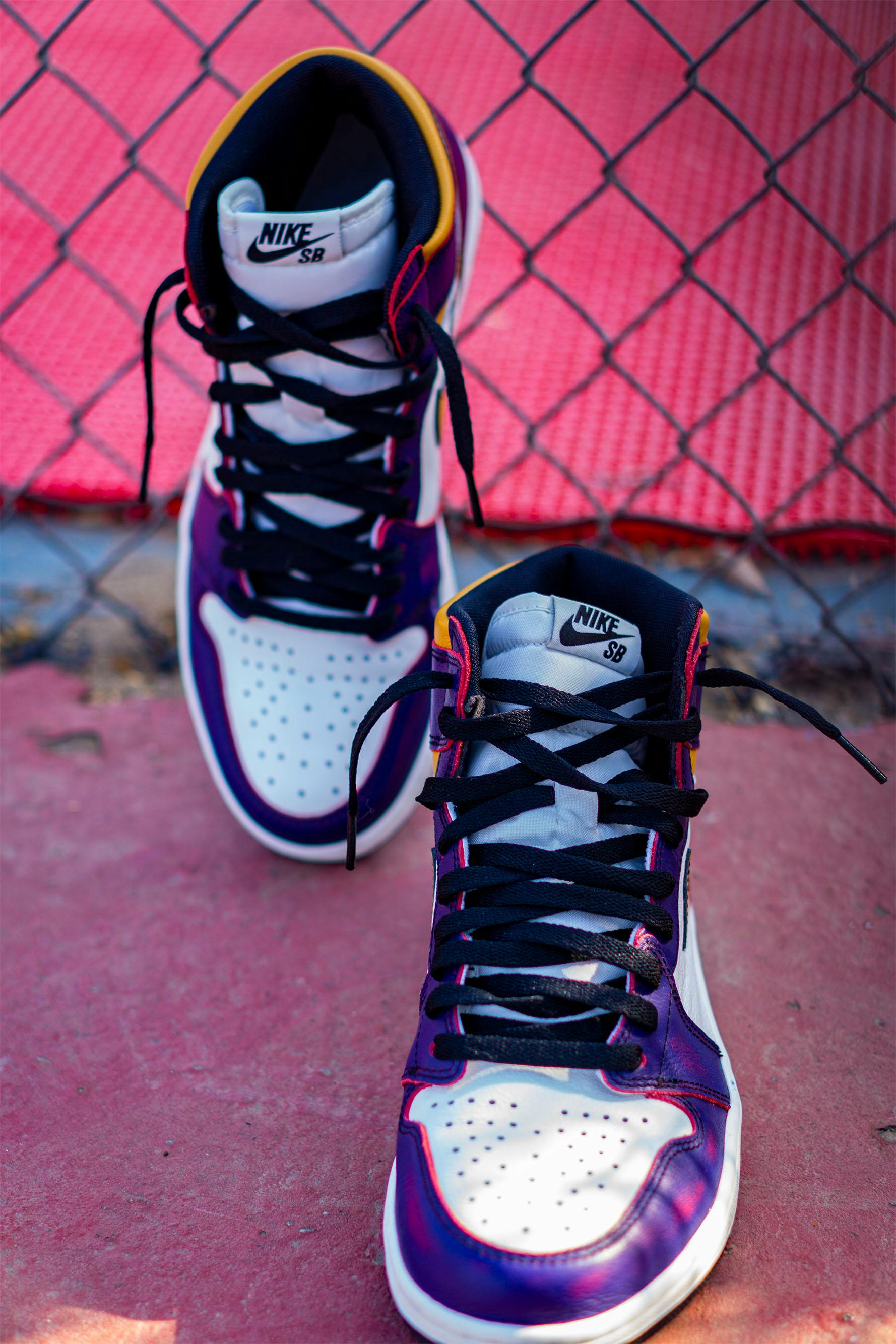
The Game-Changing Beginning: 1984-1985
Before Michael Jordan partnered with Nike, the basketball shoe market was led by Converse and adidas, with plain white leather shoes that prioritized fundamental ankle protection over design. Nike was chiefly a runner-focused company fighting in basketball, and signing Jordan was a bold move advocated by executive Sonny Vaccaro. The inaugural Air Jordan 1 shattered every convention — its striking red and black color scheme violated the NBA’s dress code, resulting in a $5,000 fine every time Jordan put on them, which Nike willingly absorbed because the controversy produced millions in free advertising. The shoe incorporated a Nike Air Air unit previously exclusive to runners, making it one of the first basketball shoes with cutting-edge impact-absorption tech. Year-one sales hit $126 million, crushing Nike’s forecasts of $3 million and proving that buyers would spend premium prices for a basketball shoe with cultural significance. The NBA ban sparked the most effective marketing narrative in footwear history — shoes so disruptive that even the league tried to prohibit them.
Tech Developments That Reshaped the Game
Beyond buy nike air jordan branding, Air Jordans introduced actual engineering innovations that moved the complete sector ahead and created new performance standards. The Air Jordan 3 (1988), designed by Tinker Hatfield, unveiled see-through Air technology to basketball shoes, enabling shoppers to view the tech they were paying for. The Jordan 11 (1995) incorporated glossy patent leather and a carbon fiber plate from aerospace technology that had never been used in sneakers. Zoom Air tech in Jordan performance shoes used stretched fibers inside sealed Air units for faster responsiveness, later integrated across Nike’s complete lineup. The Air Jordan 20 (2005) debuted independent suspension with separate Air units, influencing Nike’s Shox technology. FlightPlate tech in the Jordan 28 (2013) placed a Zoom Air unit beneath a stiff chassis, a concept that informed Nike’s React and ZoomX foam technologies. Each iteration functioned as a testing ground for technologies that trickled down to the broader Nike lineup, making the Jordan line a genuine R&D incubator.
The Athlete Sponsorship Model Transformed
The financial structure that Air Jordans invented — building an whole sub-brand around a single athlete — fundamentally reshaped athlete marketing and created a model mirrored across every big sport but never completely equaled. Before the Jordan deal, athlete endorsements were simple agreements with minimal creative control and no royalty payments. Jordan’s restructured 1997 contract contained an estimated 5 percent royalty on all Jordan Brand sales, cementing the standard that top athletes should be design collaborators and revenue partners. This template explicitly inspired LeBron James’ permanent Nike deal valued over $1 billion, Steph Curry’s ownership stake in Under Armour’s Curry Brand, and Lionel Messi’s permanent adidas agreement. Jordan Brand itself operates with approximately 10,000 employees and handles over 40 pro athletes across various sporting disciplines. Annual revenue exceeded $6.6 billion in fiscal 2025 according to Nike Investor Relations, making up approximately 13 percent of overall Nike sales. Every signature shoe deal agreed today has a foundational debt to those pioneering deals.
| Year | Milestone | Impact on Basketball Shoes |
|---|---|---|
| 1985 | Air Jordan 1 launch; NBA ban | Established athlete signature shoe model |
| 1988 | Air Jordan 3 with visible Air | Introduced visible cushioning as a marketing tool |
| 1991 | Jordan wins first title in AJ6 | Connected on-court wins with retail demand |
| 1995 | Air Jordan 11 with patent leather | Brought luxury fabrics to basketball shoes; raised pricing norms |
| 1997 | Jordan Brand becomes sub-brand | Proved athlete brands can operate independently |
| 2011 | Concord 11 retro causes nationwide frenzy | Proved enormous appetite for retros; ignited the resale market |
| 2020 | Dior x Jordan 1 collaboration | Fused high fashion with basketball sneakers |
Mainstream Influence Beyond Sports
Perhaps the most transformative contribution is how Air Jordans broke down the boundary between athletic footwear and popular culture, making the “sneaker” as a cultural object with significance far beyond its function. Before Jordans, wearing basketball shoes apart from the gym was rare. Hip-hop culture scene first championed them as fashion statements, with rappers from Run-DMC to Nelly making sneakers as essential street fashion. Spike Lee’s Mars Blackmon character in Nike commercials and his casting of Jordans in cinema like “Do the Right Thing” gave the shoes cinematic legitimacy. Japanese streetwear culture in the late 1990s raised Air Jordans to collectible art objects, exhibited alongside limited-edition designer pieces. By the 2010s, luxury houses like Dior, Louis Vuitton, and Off-White worked immediately with Jordan Brand, blurring every distinction between sports and luxury goods. This cultural impact created the contemporary sneaker industry — the resale market, sneaker conventions, collector communities, and “sneaker culture” as a worldwide phenomenon all trace their beginnings to Air Jordans.
The Retro Revolution and Sneaker Culture
Air Jordans invented the idea of the sneaker “re-release” and as a result created the entire collecting phenomenon supporting a massive international economy. Nike released the first Jordan retros in 1994, establishing that a basketball shoe could have lasting relevance beyond its initial performance lifecycle. This was a revolutionary concept — shoes had before been disposable items pulled permanently after their season. The retro model turned Air Jordans into ongoing revenue assets, allowing Nike to re-release a 1989 design and move millions at current pricing with minimal spending. By the early 2000s, the resale market where rare colorways traded at elevated prices built the foundation for platforms like StockX, GOAT, and Stadium Goods, which have handled over $10 billion in transactions. The emotional connection buyers feel toward retro Jordans — nostalgia, cultural connection, desire for history — generates buying pressure resistant to recessions. Every competing company has adopted the retro approach that Air Jordans invented, as analyzed by Complex Sneakers.
A Indelible Mark on Shoe History
The tale of how Air Jordans revolutionized basketball shoes forever is about a perfect storm — an matchless athlete, visionary designers, bold business strategy, and a era primed for disruption. Michael Jordan supplied athletic excellence and magnetism, Nike brought marketing brilliance, Tinker Hatfield and the creative team provided artistic brilliance, and consumers brought passion and buying power. No other shoe line has simultaneously revolutionized athletic technology, pioneered a new endorsement business model, invented the retro footwear category, and attained enduring cultural icon status. That unmatched blend is what makes the Air Jordan heritage authentically unmatched. In 2026 and for generations ahead, every basketball sneaker that enters the market operates in a landscape that Air Jordans permanently shaped.
